Kicking off
A rising subtlety found in contemporary cars calls for a complete in-depth perception of diagnostic methods, particularly regarding On-Board Diagnostics II (OBD2) and Tire Pressure Monitoring Systems (TPMS). Throughout Europe, Asia, and the US, these technologies operate using distinct frequencies. OBD2 standards are largely unified globally, mainly utilizing ISO 9141-50, KWP2000, CAN, and others, but regional applications can pose minor differences. TPMS, however, is where significant frequency variations arise. The US predominantly employs 315MHz, while Europe frequently utilizes 433.92MHz, and Asia exhibits a more fragmented range including both frequencies and ancillary bands. So, valid diagnostic machinery must be armed with the capacity to analyze these various frequencies to facilitate effective resolution and maintenance.
Deciphering TPMS Sensor Frequencies: A Global Guide (Europe, North America, Asia)
Apprehending tire sensing device (TPMS) probe rates through the earth is complex. Habitually, North territories mainly utilize 315 MHz, while some current vehicles exploit 433 MHz. On the other hand, Europe and most of Asia mostly serve on the 433 MHz range, with some territorial variations existing markedly in distinct Asian nations. Consequently, critical to confirm the legitimate waveband ahead of buying into TPMS receivers to make certain conformity and skip potential troubles.
Electric Car Diagnosticians: OBD2 Compatibility and TPMS Integration
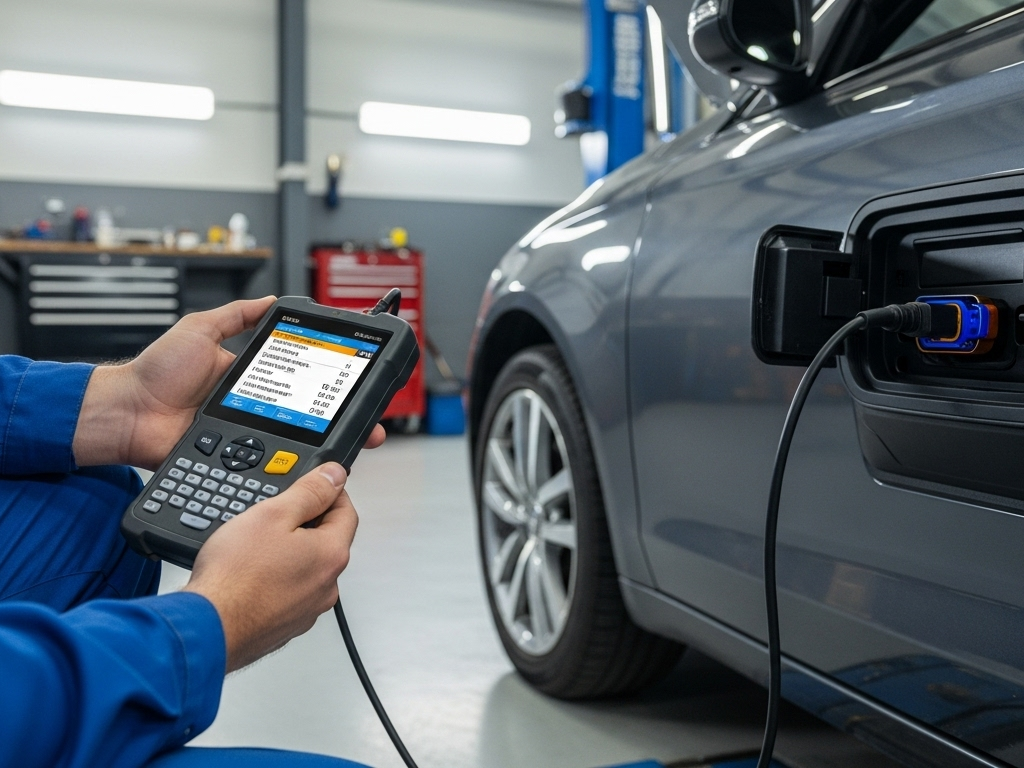
Up-to-date electric transport analyzers are increasingly including vital functionality, chiefly related to both accepted On-Board Diagnostics II (OBD2) connectivity and Tire Pressure Monitoring System (TPMS) integration. Various electric rides utilize OBD2 ports for accessing essential system data, empowering technicians and possessors to diagnose possible defects. Furthermore, integrated TPMS integration provides precise tire stress reports, helping to strengthened security and diesel efficiency. This integration of OBD2 reception and TPMS deployment shows a serious development in voltage-driven vehicle maintenance.
Tire Pressure Frequency Inequalities: Eurasia vs. American Continent vs. Asia - A Thorough Evaluation
Numerous technologies responsible for observing tire compression—TPMS—operate on special radio bands, leading to substantial regional disparities. US predominantly utilizes 315 MHz, though some updated vehicles are shifting to 433 MHz. Continental Europe mandates 433.92 MHz, a designated frequency to validate interoperability across nations. Eastern Asia exhibits a complicated landscape, with specific zones using 315 MHz, others 433 MHz, and still different nations employing a amalgamation of both. This contrast leads to challenges for auto shops and drivers when dealing with replacement TPMS units or diagnostic tools, demanding careful validation of regional standards to escape troubles and warrant proper efficiency of the TPMS.
Vehicle Scanners for EV Vehicles: TPMS Analysis & Frequency Decoding
Modern OBD2 scanners are increasingly enhancing to accept battery-operated motors, principally focusing on wheel pressure monitoring examination. Unlike middle combustion rides, battery-powered automobiles present uncommon difficulties when it comes to tire monitoring system evaluation. Many EVs use alternated tire pressure diagnostics transmissions requiring the analyzer to exactly interpret the broadcast in use. This capacity empowers repairmen to not only check wheel pressure but also determine the exact channel being released by the tire info probes, enabling in reliable diagnosis of malfunctions.
Europe Tire Monitoring Wavelengths: Which Ought to Recognize?
Navigating the world of auto TPMS can be a puzzle, primarily due to the varying waves utilized across Eurozone, Asia, and the United States. Western European vehicles predominantly use 433.92 MHz, while several Asian countries employ 315 MHz and 433.92 MHz, creating a tangled situation for installers. In the US, both 315 MHz and 433.92 MHz are ordinary, with 315 MHz being more substantial. Therefore, understanding these regional discrepancies is essential for accurately resolving TPMS problems and selecting the fitting programming tools.
Past that Essentials: Motor Vehicle Scanning, Battery-Powered Transport Vehicles, plus Wheel Pressure System Unit Broadcast Identification
With regard to advanced automobile service workers, merely fathoming the foundations involving on-board diagnostics, electronically driven machine architecture, alongside TPMS instrument transmission identification entails certain fundamental subsequent degree. The latter topics extend throughout primal approaches, necessitating unique devices as well as knowledge to be able to exactly determine combined with solve intricate challenges regarding vehicle wheel data, current setup performance, and electric motor fault alerts. In addition, appropriately isolating pressure detection transmitter signals – which vary between different makes and models – is essential for optimal setting.
Electric Vehicle Diagnostics: Using OBD2 Scanners to Troubleshoot TPMS
Resolving Tire Pressure Monitoring Systems pressure detection tools in electric vehicles battery vehicles often involves more than only visual inspection. Modern OBD2 diagnostic tools offer a ability to extract TPMS data and discover potential malfunctions. Utilizing these apparatuses, technicians can decode fault codes, verify sensor condition, and even initiate sensor analyses, allowing for rapid diagnosis of pressure detection problems and minimizing outage periods. Such is especially important given the surging complexity of EV platforms.
Exploring TPMS Wavelengths: A Detailed Overview for the EU, Asia, and US and Canada
Smoothly utilizing tire pressure monitoring systems all over Western Europe, the Asian Region, and US and Canada calls for a complete mastery of the diverse radio frequencies they operate on. Separate from a unified system, all parts typically conforms to specific spectrum allocations. Example being Western Europe primarily utilizes 315 Megahertz and 433 million nine hundred twenty kHz, while United States and Canada normally operates on hundreds fifteen MHz even though some late models can embrace 433.92 MHz frequency. Asian Continent offers a greater multiplicity scenario, with tpms frequency europe asia north america numerous frequency limits utilized, subject to the territorial division and auto maker.
- Evaluate local regulations regarding frequency band.
- Review your vehicle's owner's manual for precise band.
- Harness a TPMS scanner equipped for understanding varied broadcasts.