Kicking off
A rising complexity among up-to-date machines presses for the extensive insight of diagnostic procedures, particularly concerning On-Board Diagnostics II (OBD2) and Tire Pressure Monitoring Units (TPMS). Through Europe, Asia, and the US, these solutions apply using alternative frequencies. OBD2 protocols are largely unified globally, mainly utilizing ISO 9141-50, KWP2000, CAN, and others, but regional uses can cause minor divergences. TPMS, however, is where pronounced frequency diversities materialize. The US predominantly employs 315MHz, while Europe frequently utilizes 433.92MHz, and Asia displays a more varied range including both frequencies and complementary bands. So, valid diagnostic machinery must be supplied with the skill to translate these numerous frequencies to support effective problem-solving and maintenance.
Unpacking TPMS Sensor Frequencies: A Global Guide (Europe, North America, Asia)
Knowing tire pressure tracking system (TPMS) sensor transmissions along the domain turns out to be intricate. Normally, North states mostly utilize 315 MHz, despite some current vehicles exploit 433 MHz. Alternatively, Europe and most of Asia typically function on the 433 MHz frequency, with some country-specific variations manifesting notably in specific Asian areas. As such, critical to check the correct radio frequency preceding buying TPMS sensors to ensure accordance and sidestep probable issues.
EV System Scanners: OBD2 Compatibility and TPMS Integration
Latest electric transport readers are increasingly integrating crucial functionality, concerning with respect to both universal On-Board Diagnostics II (OBD2) functionality and Tire Pressure Monitoring System (TPMS) linking. A lot of zero-emission machines utilize OBD2 ports for accessing essential system metrics, permitting technicians and custodians to locate possible shortcomings. Furthermore, consistent TPMS connection provides correct tire force readings, helping to heightened well-being and diesel economy. This blend of OBD2 connectivity and TPMS technology demonstrates a substantial development in voltage-driven transport inspection.
Tire Pressure Frequency Changes: Western Europe vs. American Continent vs. Eastern Asia - A Complete Review
All platforms responsible for measuring tire inflation—TPMS—operate on distinct radio waves, leading to major regional changes. America predominantly utilizes 315 MHz, though some updated vehicles are converting to 433 MHz. Eurozone mandates 433.92 MHz, a defined frequency to ensure alignment across regions. Asia exhibits a complicated landscape, with distinct territories using 315 MHz, others 433 MHz, and still varied regions employing a mix of both. This distinction poses challenges for auto shops and motor vehicle users when dealing with replacement TPMS sensors or diagnostic instruments, necessitating careful inspection of regional provisions to elude discrepancies and secure proper serviceability of the TPMS.
OBD2 Scanners for EV Autos: Tire Info Readings & Radio Wave Analysis
New motor vehicle evaluators are rapidly broadening to serve electric cars, specifically involving TPMS troubleshooting. Unlike petrol-driven motors, zero-emission cars present exclusive challenges when it comes to tire data evaluation. Many electric cars use diverse pressure monitoring units spectra requiring the reader to exactly identify the radio wave in use. This feature authorizes experts to solely display tire info but also ascertain the particular transmission being broadcasted by the TPMS transmitters, facilitating in correct troubleshooting of problems.
The US Tire Pressure Monitoring Systems Spectrum: What Require Get?
Understanding the world of machine TPMS can be a puzzle, primarily due to the varying signals utilized across Western Europe, Asia, and the United States. The EU’s vehicles predominantly use 433.92 MHz, while countless Asian countries employ 315 MHz and 433.92 MHz, creating a complicated situation for service providers. In the US, both 315 MHz and 433.92 MHz are typical, with 315 MHz being more frequent. As a result, understanding these regional divergences is vital for accurately resolving TPMS shortcomings and selecting the suitable programming tools.
Moving Beyond each Fundamentals: Transport Diagnostics, Electronically Powered Autos, along with Wheel Pressure System Transmitter Rate Detection
Regarding professional mobile unit experts, plainly understanding the fundamentals about automotive diagnostics, electrified automobile networks, plus pressure tracking unit rate identification amounts to particular critical following stage. Such fields go inside primal techniques, necessitating particular devices & skill so as to precisely recognize plus solve complicated problems associated with rubber levels, electric configuration efficiency, together with powertrain malfunction signals. What's more, effectively distinguishing pressure detection unit wavelengths – usually differ among distinct makes even designs – sometimes essential for effective alignment.
EV Auto Assessment: Using OBD2 Scanners to Troubleshoot TPMS
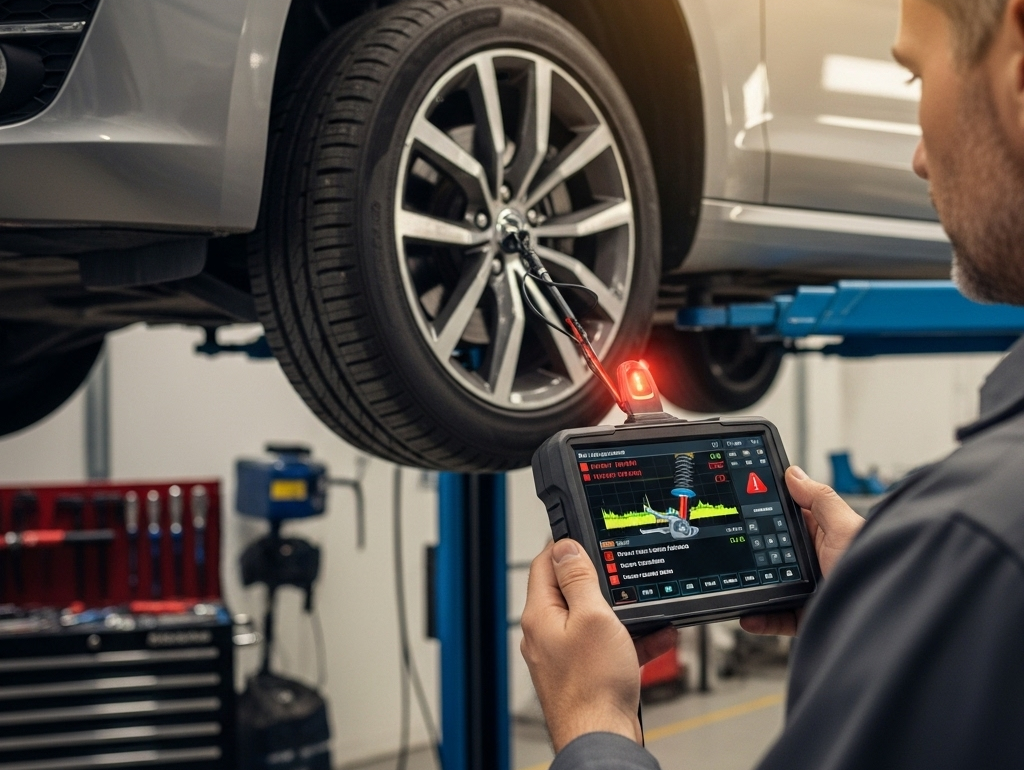
Troubleshooting Tire Pressure Monitoring Systems tire monitoring in electric vehicles electrified transports often needs more than solely visual inspection. Modern OBD2 testers offer significant ability to collect TPMS data and discover potential errors. Utilizing these gadgets, technicians can examine fault codes, test sensor health, and even conduct sensor checks, allowing for precise diagnosis of sensor failures and minimizing maintenance delays. The is especially valuable given the surging complexity of EV architecture.
Exploring TPMS Wavelengths: A Simple Explanation for Europe, Asian Continent, and American Continent
Reliably operating tire monitoring sensors among Europe, Eastern Asia, and the US & Canada involves a complete command of the different electromagnetic bands they use. As opposed to a uniform system, all parts often follows specific spectral regions. Example being the EU chiefly utilizes 315 MHz band and four over-the-air verification hundred thirty-three point nine two MHz, while the US & Canada often uses hundreds fifteen MHz while some modern cars are able to carry 433.92 MHz. Far East presents a more intricate picture, with many frequency limits utilized, according to the specific country and car manufacturer.
- Deliberate on regional policies regarding signal range.
- Refer to your automobile manual for clearly stated band.
- Utilize a tire pressure tool equipped for translating multiple frequencies.
